If water is heading toward an IT room right now
Only act where it is safe. Never stand in water near energized equipment.
Why these rooms are vulnerable
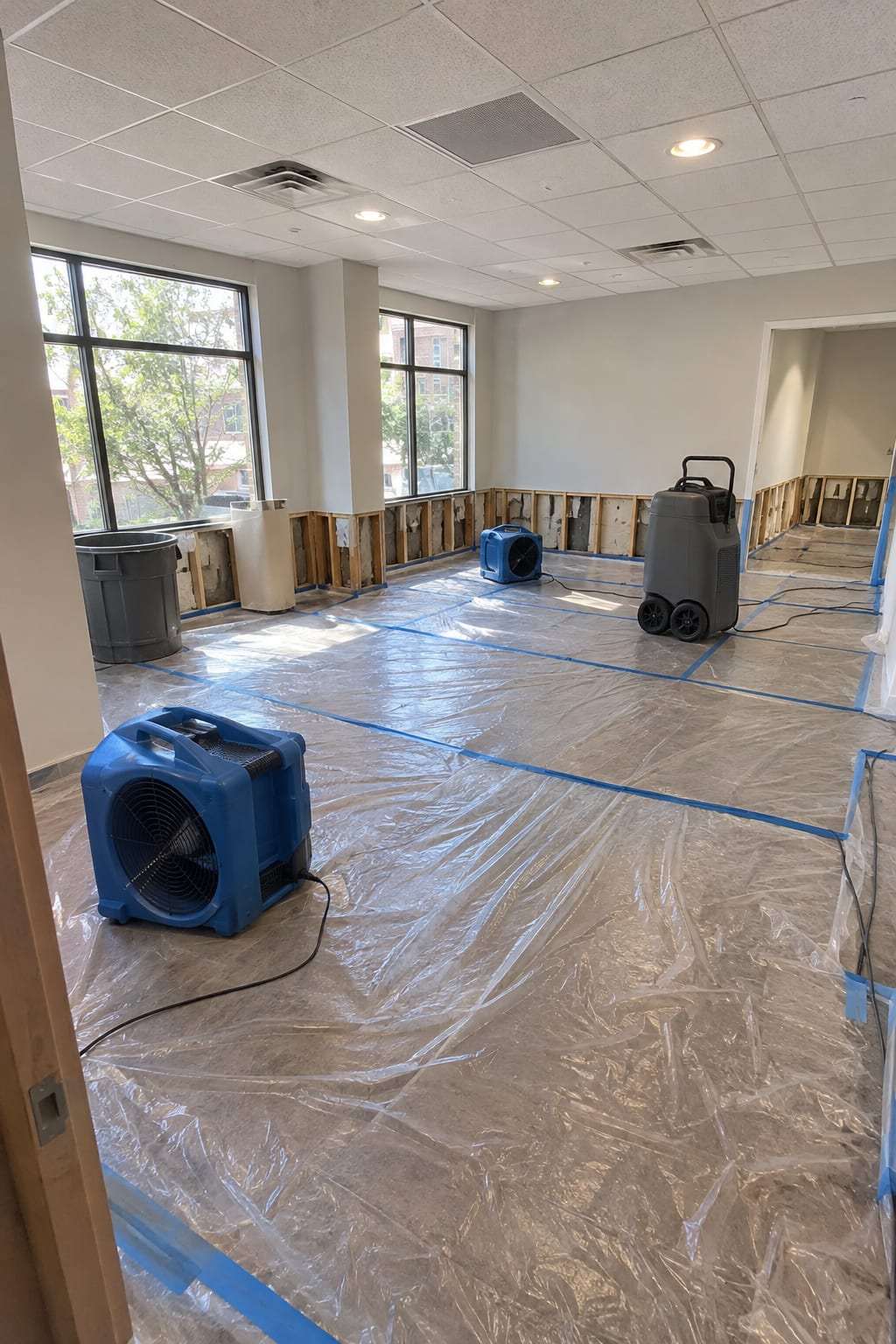
Tenant network closets are often small rooms carved out of the core, near plumbing walls and below supplemental cooling units. Those units produce condensate, and a clogged drain line or a failed pump can leak right above the rack. Server rooms in older buildings may also sit below restrooms or break rooms on the floor above.
Wet electronics should be assessed by the tenant's IT provider or the equipment manufacturer, not powered back up to see if they work. Water and mineral residue can cause damage that shows up later, and powering wet equipment risks further harm. Specialist electronics cleaning exists for some situations; ask the insurer and IT provider whether it makes sense versus replacement.
Paper is a separate track. Wet business records can sometimes be frozen and later dried by document recovery specialists. Speed matters: once mold begins on paper, recovery is harder. Ask the tenant to decide quickly which files are vital, which are duplicated elsewhere, and which can be discarded.
Who handles what
| Item | Usually decided by | Notes |
|---|---|---|
| Servers, switches, storage | Tenant and its IT provider | Shut down in order; do not restart wet gear without assessment. |
| Supplemental cooling unit | Building engineering or HVAC vendor | Check condensate drain and pump; often the source of the leak. |
| Ceiling, walls, flooring in the room | Owner or tenant, depending on the lease | Drying and replacement follow the lease's split of responsibility. |
| Paper records | Tenant | Freeze or pack quickly if they are vital and wet. |
| Fire suppression in the room | Fire protection vendor | Clean-agent or sprinkler systems should be checked after any water event. |
General information for Downtown Denver, not a quote or professional advice. In an emergency, call 911.