Building patterns in the area
- Age
- Largely 2000s and later, around the restored station and the former rail yards, with Riverfront Park residential blocks nearby.
- Types
- Glass office towers, apartment and condo high-rises and mid-rises, hotels, ground-floor retail.
- Podiums
- Many buildings share or sit on parking podiums and below-grade structures.
- Ownership
- Institutional owners, condo associations and separately owned retail or garage components.
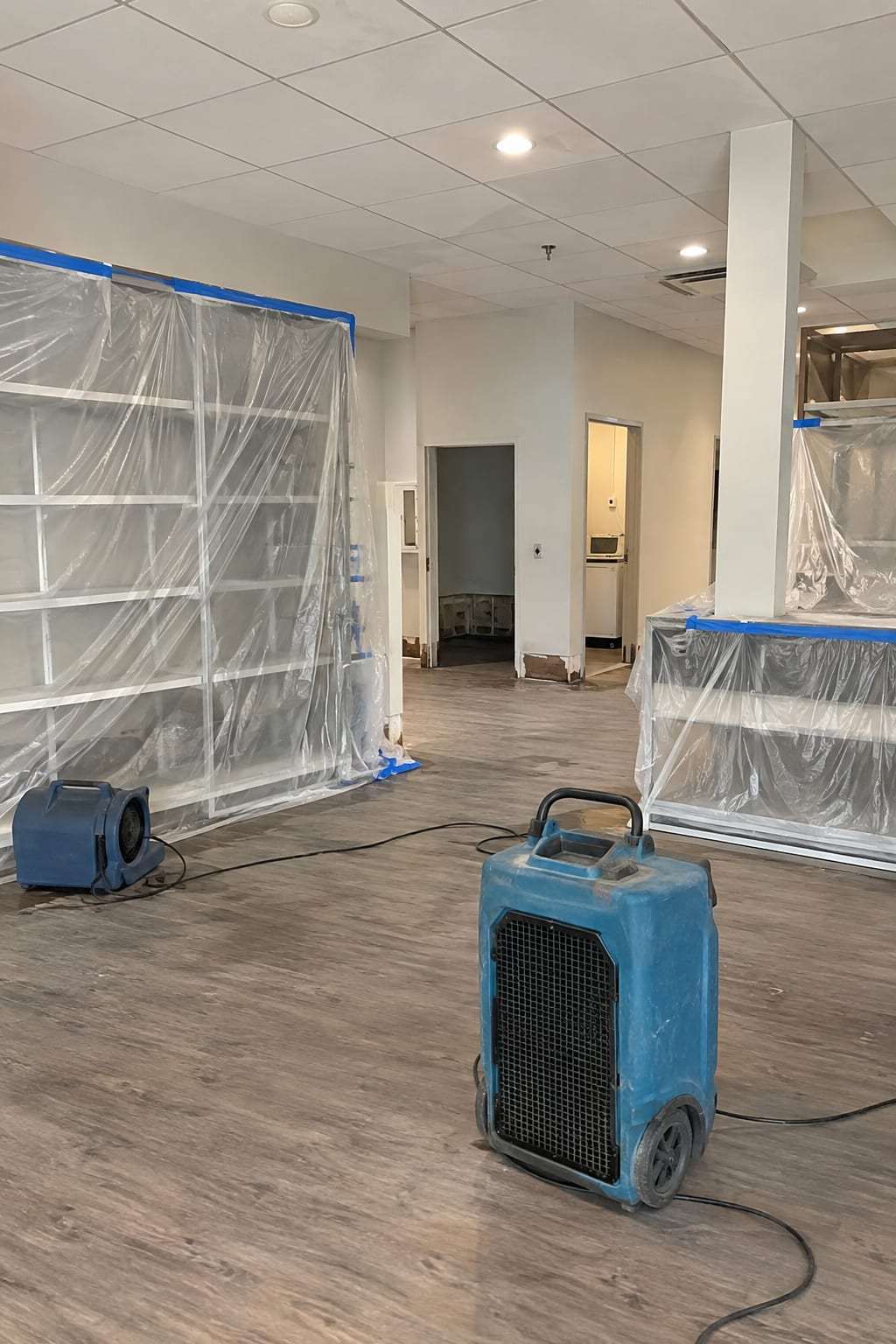
What is different about losses here
New construction does not mean no losses. In newer towers, failures tend to come from components rather than age: a supply-line fitting, a fan-coil unit's condensate drain, a sprinkler head damaged during a tenant buildout, or a domestic water booster pump. Water spreads through the same shafts and slab penetrations as in older towers, sometimes faster because open floor plates have few walls to slow it.
Ownership is often layered. A residential tower may be a condominium sitting above a commercially owned retail level and a separately managed garage, with shared systems governed by a reciprocal agreement. Before a loss, find out which entity controls each riser, pump room and electrical room, and who can authorize emergency work in each.
Some buildings are new enough that original contractor or manufacturer coverage on certain systems may still apply. Check before replacing equipment, and preserve failed parts.
Loss sources common in newer mixed towers
| Source | Where it starts | Who to involve |
|---|---|---|
| Fan-coil condensate overflow | Residential and hotel units, above ceilings | HVAC vendor, association or hotel engineering |
| Supply-line or fixture failure | Kitchens and bathrooms in residential units | Unit owner, association, plumber |
| Sprinkler damage during buildout | Tenant improvement floors | Fire protection vendor, general contractor's insurer |
| Booster pump or PRV failure | Pump rooms, often low in the building | Building engineering, plumber |
| Garage drainage backup | Below-grade parking | Garage operator, building engineering |
Questions for managers in this area
- Which shared systems fall under a reciprocal or shared-facilities agreement?
- Who has authority to enter residential units in an emergency?
- Are any building systems still within an original contractor's or manufacturer's coverage period?
- Is there a hotel, retail or garage operator who needs to be in the notification chain?
- How does access for equipment work around transit plazas and pedestrian areas?
FAQs
Do newer buildings dry faster than older ones?
Often, because gypsum, metal studs and concrete respond predictably to dehumidification. But tightly sealed modern envelopes can trap humidity, so drying still has to be monitored and verified.
General information for Downtown Denver, not a quote or professional advice. In an emergency, call 911.